Happy Loman
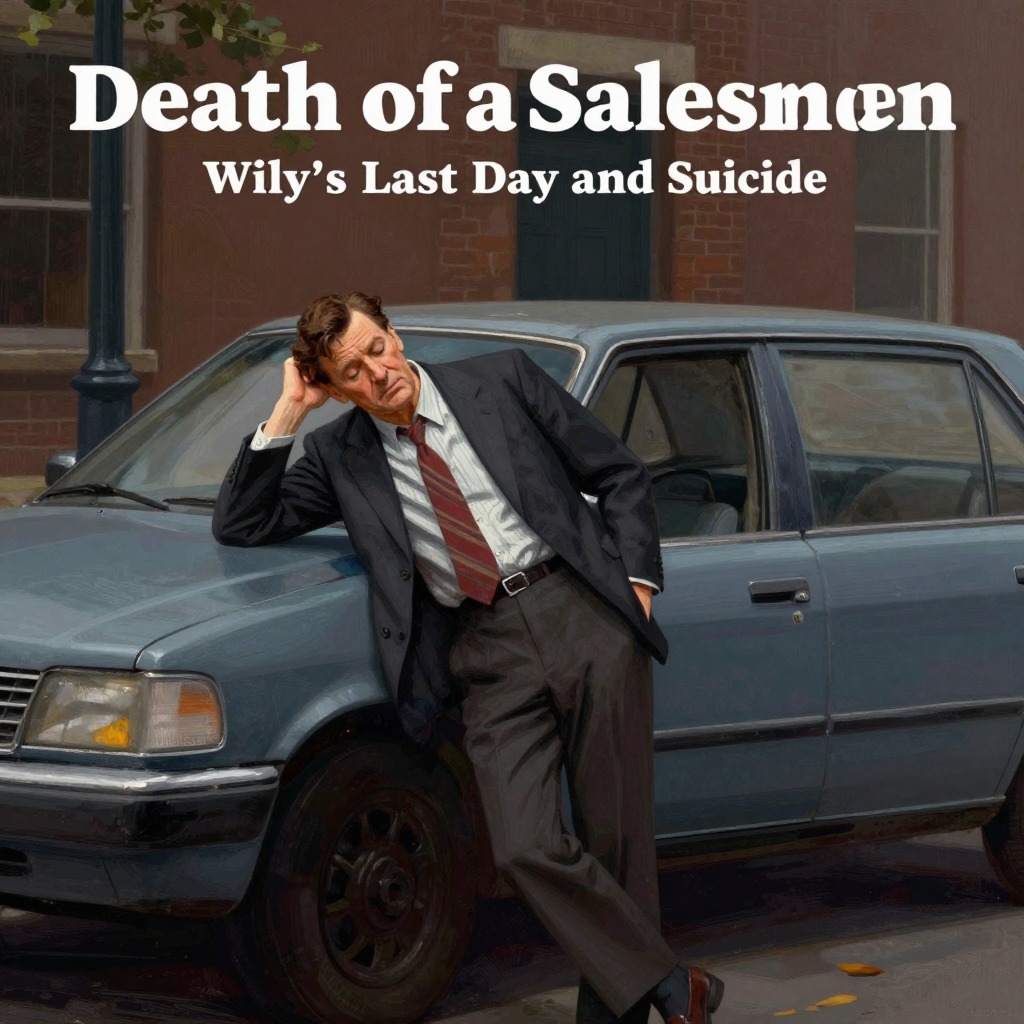
Happy Loman, the younger son of Willy and Linda Loman, is a figure of restless energy and unfulfilled promise. Introduced as tall and powerfully made, with a sexuality that is "like a visible color on him, or a scent that many women have discovered," Happy is, like his brother Biff, lost, but in a different way. He has never allowed himself to turn his face toward defeat and is thus more confused and hard-skinned, although seemingly more content. His life is a performance of success, a frantic chase after the material and sexual prizes his father taught him to value, yet it yields him no genuine satisfaction. He is the Loman who stays, who will inherit Willy's dreams and his delusions, and who will fight to prove that Willy Loman did not die in vain, making him a crucial figure in the play's examination of how a corrosive dream is passed down and perpetuated.
Identity and Background
Happy, whose real name is Harold, is two years younger than Biff. He shares the family home, sleeping in the same attic bedroom where he and Biff once talked through their plans and dreams. He works as an assistant buyer in a department store, a position he has achieved through a combination of charm and a willingness to compromise. He is deeply aware of his father's decline, noting that Willy talks to himself and that it has become embarrassing. He once sent his father to Florida to get him away, but he remains largely unable or unwilling to confront the root of the problem. Happy's identity is built on a foundation of denial and a desperate need to project an image of success, a trait he has learned directly from Willy.
Life and Plot Trajectory
Happy's trajectory in the play is one of avoidance and temporary escape. On the night Willy returns home exhausted, Happy takes Biff on a date, and the two brothers reminisce about their youth. Happy boasts of his sexual conquests, including ruining an engaged woman whose fiancé is an executive at his store, a pattern he repeats with other executives' women. He describes his life as one of lonely luxury: an apartment, a car, plenty of women, but a profound sense of emptiness. When Biff proposes they buy a ranch out West, Happy is initially enthused, dreaming of the "Loman Brothers" and the old honor and comradeship. But he quickly retreats, admitting he wants to first prove himself in the city, to walk into the store the way his merchandise manager does. This pattern of dreaming big and then retreating into the safety of the familiar defines him. He orchestrates a dinner at Frank's Chop House to celebrate Biff's supposed success with Bill Oliver, but when the evening collapses into Biff's confession and Willy's breakdown, Happy abandons his father in the restaurant, going off with the two women he has picked up.
Key Actions and Objectives
Happy's primary objective is to win his father's approval and to prove that the Loman name can still mean something. He is the son who stays, who tries to buck up Willy's spirits with talk of the "Loman Brothers" sporting goods line. He lies to his father, telling him Biff has a lunch date with Oliver the next day, and he urges Biff to keep up the pretense to make Willy happy. He also has a more selfish objective: to achieve the material success that will validate his own life. He wants to be the merchandise manager, to have the power and the money that he believes will fill the void inside him. His actions are often self-serving, as when he abandons his father at the restaurant, but they are also driven by a desperate, unexamined loyalty to the family myth.
Relationships and Conflict
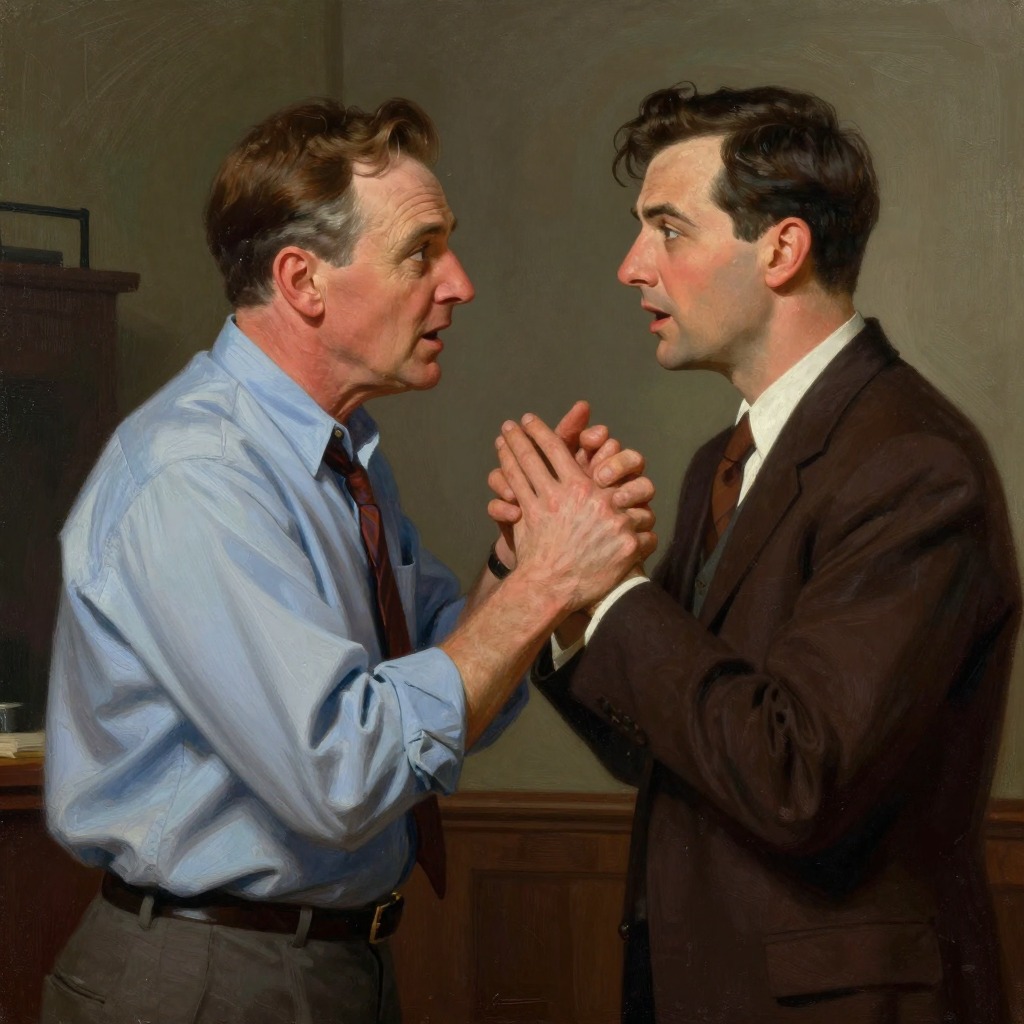
Happy's relationship with his father is one of complicity and avoidance. He listens to Willy's complaints, tries to soothe him, and participates in the family's shared fantasies. He is the son who never directly challenges Willy, unlike Biff. His relationship with Biff is more complex. He admires Biff's past glory and wants to recapture it, but he also resents Biff's freedom and his willingness to walk away. When Biff confronts Willy with the truth, Happy defends the dream, shouting, "Don't say that!" and later insisting, "Willy Loman did not die in vain. He had a good dream." This conflict is the play's central tension between the two brothers: Biff's painful, liberating honesty versus Happy's stubborn, self-protective adherence to the lie. Happy's relationship with his mother, Linda, is one of neglect. He gives her money at Christmas, but as she points out, he never troubles his mind with his father's problems. He is a son who provides the appearance of support without the substance.
Change and Ending
Happy undergoes no fundamental change. At the end of the play, at Willy's grave, he is the only one who refuses to accept the truth. While Biff says his father "had the wrong dreams," Happy angrily retorts, "I'm not licked that easily. I'm staying right in this city, and I'm gonna beat this racket!" He vows to show everyone that Willy Loman did not die in vain, that his dream was the only one worth having. He will stay and fight, perpetuating the very cycle of delusion and striving that destroyed his father. He is the living legacy of Willy's failed dream, a man who will continue to chase the same phantom, forever believing that the next deal, the next woman, the next promotion will finally bring him the happiness that has always eluded him.
Narrative Role and Evaluation
Happy serves as a foil to Biff and a mirror to Willy. He represents the path not taken by Biff: the path of accommodation, of staying in the system and trying to beat it. He is the embodiment of the American Dream's second generation, the son who inherits not the wealth but the hunger, the anxiety, and the performance. His character demonstrates the play's central irony: that the dream which promises fulfillment actually breeds a profound, inarticulate loneliness. He is a salesman in training, a man who has learned to sell himself so thoroughly that he no longer knows who he is. His final, defiant speech at the grave is not a sign of strength but a testament to the dream's enduring, tragic power. He will go on, smiling and scheming, a ghost in the machine of his own life, forever chasing a tomorrow that will never come.